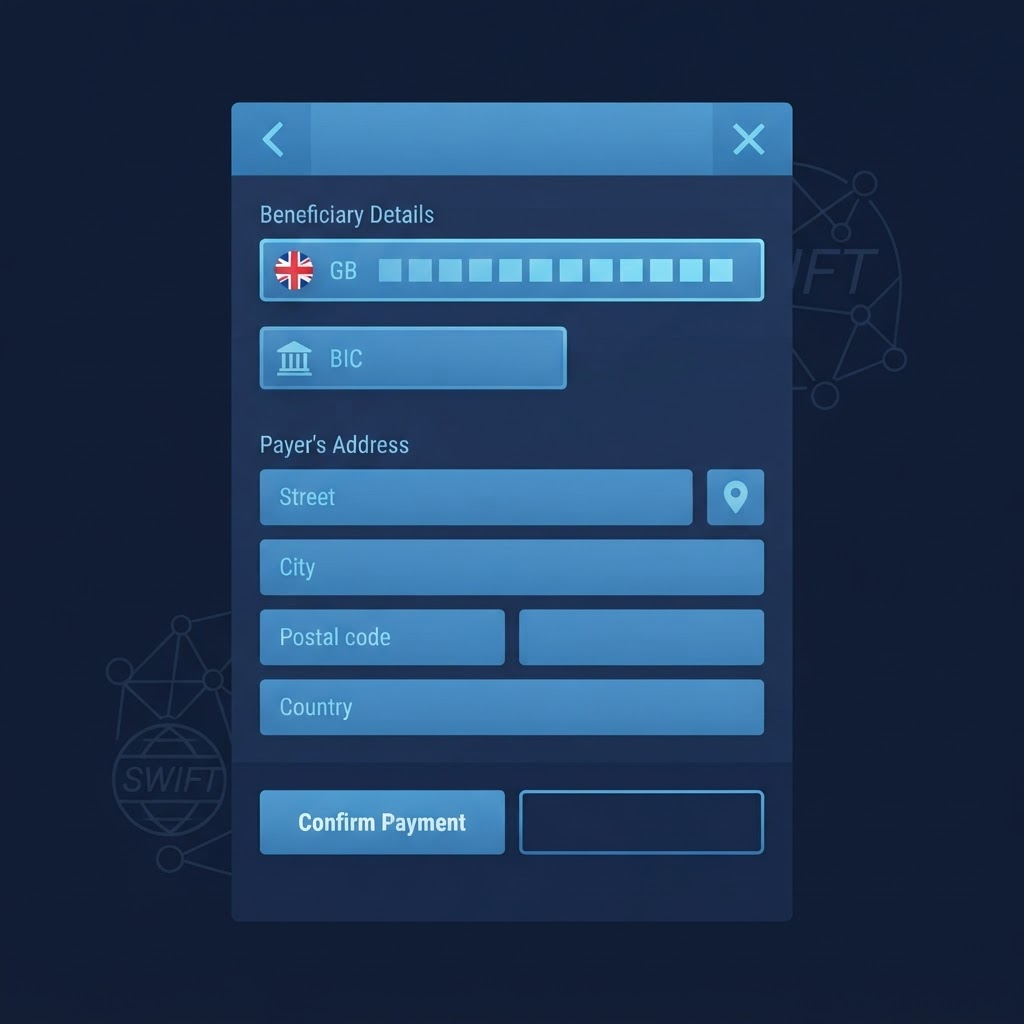
Yes. SEPA payments can be made to the UK. A customer in Germany, France or Spain can pay your GB IBAN by SEPA credit transfer today, exactly as they could before Brexit. If you only needed the yes or no, you have it. The reason the question keeps being asked is that the UK's position inside SEPA did change on 1 January 2021, and the change shows up as rejected payments, surprise fees and the occasional supplier portal that refuses to save a GB IBAN. This guide explains what actually changed, from the scheme's own documents, and what to send your EU payer so the money lands first time. ## The short answer The UK sits inside the SEPA geographical scope as a non-EEA country. The European Payments Council, which runs the SEPA schemes, confirms the UK remains part of SEPA as of 1 February 2020 by decision of its board on 7 March 2019, and lists it with the country code GB and the currency GBP. What changed is the rulebook that applies. From the end of the transition period, SEPA transactions involving a UK participant follow the rules for payments to and from non-EEA jurisdictions. That brings three catches: 1. The EU payer must include their full address, and sometimes your bank's BIC. 2. EU law no longer forces the payer's bank to price the payment like a domestic one. 3. The EU ban on IBAN discrimination protects accounts inside the Union, which a UK account is not. None of these stop the payment. All three can delay it or add cost if nobody on either side knows about them. ## Why the UK is still a SEPA country after Brexit SEPA membership was never the same thing as EU membership. The EPC's country list includes Switzerland, Andorra, Monaco, San Marino, the Vatican and, since 2025, Albania, Montenegro, North Macedonia and Moldova, none of which are EU members. Any country whose payment providers meet the scheme's participation criteria can be admitted. For the UK, the EPC approved UK Finance's application for the continued participation of UK payment service providers on 7 March 2019, explicitly covering a no-deal outcome, on condition that the UK keeps complying with the SEPA participation criteria. AccessPay describes how that condition is kept: an annual equivalence self-assessment conducted by UK Finance. The EPC also runs a periodic review for every non-EEA SEPA country. On the UK side, the SEPA Regulation was onshored into UK law. The FCA is the competent authority overseeing SEPA compliance in the UK, and UK providers must participate in one of the EU-wide SEPA schemes to be reachable for euro payments. One edge case worth settling: Northern Ireland. Stripe notes that the Windsor Framework covers trade in goods, not payments, so SEPA rules apply in Northern Ireland exactly as they do in the rest of the UK. ## Catch 1: the EU payer must add their address and maybe your BIC This is the one that causes rejected payments. ### What the EPC requires for payments to the UK The EPC's Brexit notice is unusually direct. For SEPA credit transfers and SEPA Instant payments executed from 1 January 2021 involving a UK participant, the instruction from the payer must contain: - the full address details of the originator, meaning the EU business or person paying you
- •the BIC of the beneficiary bank, your bank, when the payer's bank explicitly asks for it For SEPA Direct Debit collections, the mirror applies: a UK creditor collecting from an EU account must include the debtor's full address and the debtor bank's BIC when requested. The EPC warns that the lack of these details may lead to rejected transactions by the receiving bank or its clearing partners. In practice the payer's bank usually fills in the address from its own records, so the weak point is a payer whose address on file is incomplete or stuffed into one free-text line. BNP Paribas in Germany tells its corporate clients to remind UK payers to always include their full name and address to avoid delays in crediting. The same advice runs in reverse for your EU customers. The BIC should be easy. Inside the EEA, banks may not make it mandatory, and that rule survived in the UK too. But because your payment is now a non-EEA leg, some EU banks ask for it. If the payer cannot find yours, the UK Finance and Swift SEPA IBAN-only Directory, referenced by the FCA, returns the correct BIC for a UK payee from a GB IBAN free of charge. Our guide to IBAN, SWIFT and BIC explained covers which code goes in which field. ### The 15 November 2026 structured address deadline There is a second deadline that nothing else on this topic mentions. The EPC's address guidance states that for SEPA credit transfers and SEPA Instant payments executed from 15 November 2026, any address in the message must be structured or hybrid, and unstructured addresses will be rejected. Within the address, the Country and Town Name fields are mandatory. Because the payer address is mandatory on every payment to the UK, this rule bites UK beneficiaries harder than most. A German supplier paying an Italian one may never notice. A German customer paying you will, if their accounts system still exports the address as a single line. If you issue many euro invoices to EU customers who pay from accounting software or batch files, it is worth flagging the date to them now. We cover the outbound version of the same rule in SEPA transfer from the UK to Germany. ## Catch 2: EU law no longer caps what the payer's bank charges Most people assume SEPA means free. It never did. ### What the equal charges rule says and where it stops The EU rule is Regulation 924/2009 on cross-border payments, now carried in Regulation 2021/1230. The European Commission's own FAQ explains that it equalises charges: a cross-border euro payment must cost the same as a corresponding national payment at the same provider. It does not mandate that payments be free, and it only holds if the payer uses the IBAN, chooses the SHARE cost option and gives no urgent or express instruction. Miss any of those and extra charges may apply even inside the EU. That rule binds EU providers for payments within the EU. After Brexit the UK leg falls outside it. The Federation Bancaire Francaise put it plainly to Connexion France: while the British can continue to use the SEPA standards, the pricing principle under European law is no longer applicable if one of the two parties is in the UK, so fees are not abnormal. The same report notes that not all banks apply them. ### What EU banks actually do The legal cap is gone, but the default at the large banks has mostly held. Two published examples: - Deutsche Bank lists the United Kingdom of Great Britain and Northern Ireland on its own SEPA country list and prices a payment to it as a SEPA transfer, which can only be instructed with the SHARE option. The expensive path is the one where the payment is keyed as a euro payment order in foreign trade rather than SEPA: 1.5 per mille with a 10 euro minimum, plus 1.55 euro for SWIFT, plus a 25 euro third-party flat fee on an OUR payment.
- •BNP Paribas Germany told its corporate clients that fees and processing for euro payments to or from the UK would not change if instructed as SEPA transfers, while euro payments not instructed as SEPA would be processed as international payments and charged as transfers outside the EU and EEA from 1 November 2021. So the practical risk is not SEPA itself. It is your payer, or their payment screen, treating a GB IBAN as "international" and routing the payment down the SWIFT path, where charges and correspondent deductions live. Tell the payer to choose SEPA explicitly. If their bank still charges, that is their tariff and worth a question to their relationship manager, but it is the exception at the big institutions. ## Catch 3: a GB IBAN can be refused, and the law is thinner than you think Some EU supplier portals, payroll systems and public bodies reject IBANs that do not start with their own country code. Within the EU this is unlawful. Article 9 of the SEPA Regulation, quoted in full in a Central Bank of Ireland letter, says a payer or payee shall not specify the Member State in which a counterparty's payment account is located, provided that account is reachable under the scheme. Read the wording carefully, though. Article 9 protects a payee holding a payment account "located within the Union". A UK account is not located within the Union. So when a German portal refuses your GB IBAN, you are not in the position of a Belgian company whose BE IBAN is refused in Paris. You cannot point to a breach of EU law and expect a regulator to act. Stripe's observation that some businesses see GB IBANs wrongly rejected is accurate as a description; the "wrongly" is weaker in law than it sounds. How big is the underlying problem? The European Consumer Centres Network reports that the industry platform Accept My IBAN logged 4,688 complaints between 2021 and the end of March 2025, most from France, Germany, Spain and Italy, and names obsolete systems that do not recognise other country codes or IBAN lengths as a main cause. Those are EU IBANs being refused inside the EU, with the law on the complainant's side. A GB IBAN meets the same old software without the same legal lever. What works instead is commercial, not legal: - Ask the payer to retry with your BIC and full address included; many rejections are a missing field, not a refusal.
- •Ask them to escalate to their bank's payments desk, since the bank itself almost certainly has the UK on its SEPA list.
- •Give them a euro IBAN from a SEPA country they can pay without friction, which is the route many UK exporters take and the one we come to below. This is a description of how the rules work, not legal advice; a refused payment of real size deserves a conversation with your own adviser. ## Checklist to send your EU payer Paste this into the invoice email. It removes almost every reason a SEPA payment to the UK fails. 1. Pay by SEPA credit transfer, not "international transfer". Pick the SEPA or euro transfer option in your banking screen.
- •Beneficiary IBAN: your GB IBAN, 22 characters, starting GB.
- •Beneficiary BIC: your bank's BIC, in case the payer's bank asks.
- •Beneficiary name: the exact registered name on the account, so Verification of Payee does not flag a mismatch.
- •Your own address: make sure your bank holds your full business address, including town and country, in separate fields.
- •Cost option: SHARE. Do not select OUR or BEN, and do not tick urgent.
- •Reference: the invoice number, nothing else. Items 2 to 5 come straight from the EPC's requirements for payments to a UK participant; item 6 is the condition the Commission attaches to equal charges; item 1 is the lesson from the bank tariffs above. ## Receiving it on the UK side Once the payment is correctly instructed, acceptance in the UK is rarely the problem. Almost every mainstream UK bank takes an incoming SEPA credit transfer. The cost appears afterwards, when euros land in a sterling account and are converted at the bank's rate. We list what each bank says on its own pages in which UK banks accept SEPA payments, and the operational side of getting paid is covered in receiving SEPA payments in the UK. If your customers pay by SEPA Instant, see SEPA Instant payments to the UK. ## Where EXFI fits, and what it is not Straight answer first: EXFI is not a bank. EXFI accounts are payment accounts, not bank accounts. Funds are not covered by the FSCS; they are safeguarded in segregated accounts under the Payment Services Regulations 2017. Regulated payment services are provided by Gemba Finance Limited (FCA FRN 804853), UK customers only. EX Financial Solutions Ltd, trading as EXFI, acts as a distributor of those services and is not itself authorised by the FCA. What that gives a UK business being paid from the EU, per the published EXFI features and pricing: - a dedicated EUR IBAN alongside GBP and other currencies, so your EU customer pays a euro IBAN and you hold the euros rather than converting on arrival
- •SEPA, FPS, BACS, CHAPS and SWIFT rails from one account
- •SEPA payments listed at 0.99 GBP
- •FX at 0.70 percent on major pairs when you do choose to convert
- •no monthly fee for UK-incorporated entities, no opening fee and no minimum balance Business customers only, and none of this is financial advice. Compare the tariff for your own volumes and currencies. ## FAQ ### Can a SEPA Instant payment be sent to a UK account? The scheme reaches the UK. The EPC applies the same address and BIC requirement to SEPA Instant Credit Transfers involving a UK participant as it does to standard SEPA credit transfers. Whether a specific UK provider is reachable depends on that provider having adhered to the SCT Inst scheme, which you can check in the EPC's register of participants. ### Can an EU company collect a SEPA Direct Debit from a UK account? Yes, provided the UK bank participates in the SEPA Direct Debit scheme. Since 1 January 2021 the collection file must carry the debtor's full address, and the debtor bank's BIC when the creditor's bank requests it. Missing either can cause the collection to be rejected. ### Does a SEPA payment to the UK count as an international transfer? Not if it is instructed as SEPA. BNP Paribas Germany's guidance to corporate clients states that euro payments to or from the UK keep SEPA pricing and processing when instructed as SEPA transfers, while euro payments not instructed as SEPA are processed and charged as international transfers outside the EU and EEA. ### Why was my SEPA payment to the UK rejected? The two most common causes are a missing originator address and a missing beneficiary bank BIC where the payer's bank requires one, both of which the EPC flags as grounds for rejection on payments to UK participants. From 15 November 2026, an address supplied in unstructured free-text form will also be rejected. ### Does Northern Ireland follow the same SEPA rules as the rest of the UK? Yes. The Windsor Framework governs trade in goods, not payments, so a SEPA payment to a Northern Ireland account follows exactly the same rules, including the address and BIC requirement, as a payment to an account in England, Scotland or Wales.